How To Tattoo Cattle
Learning How to Tattoo Cattle
On a registered beef cattle farm it is usually required or at least recommended to tattoo
cattle. Tattooing is a means of unique identification if the breeder wishes to register purebred animals
with breed registries or exhibit them at livestock shows. Tattooing cattle when done right is a permanent
identification mark that will stay with the animal all through life. Permanent identification methods of cattle on
a beef farm indicate good management practices and will add to the creditability of the operator.
It is easy to tattoo cattle, however that is not the
only system of identification but there is none more permanent and it sure comes in handy when cattle lose the
temporary ear tags. Breed associations and most shows require permanent identification and the
cattle tattoo will satisfy both of these. Most breed associations will have their own recommendations to tattoo
cattle so you will need to check to be sure you tattoo your cattle in the correct manner and with the correct
information.
Even though the cattle tattoo is a method of identification that is permanent if properly done it
is not easily viewed unless the animal is restrained. For this reason it is advisable to add another complementary
type of identification such as an ear tag or brand that is visible from short distances.
Instructions to Tattoo Cattle
To tattoo cattle will require tattoo pliers, numbers or letters made of sharp, needlelike
projections which pierce the skin and tattoo ink or paste.
For inking green paste is my favorite and I find it shows up better in dark eared cattle. Roll on
applicators are less messy and easier to use but on average the tattoos are not as legible. I believe the reason
for a less legible tattoo with a roll on applicator is because it is too easy to substitute speed for quality.
You will also need a way to restrain the cattle while the tattoo is applied, a cattle chute and cattle head gate
works well for this.
First step to tattoo cattle is gather tools.
Biosecurity protocol should be followed by working in
an environment that is as clean as possible. Other measures to decrease spread of disease include wearing
gloves, using separate cloths or pads to clean cattle ears and disinfecting equipment between animals.
Below is a list of recommended materials used to tattoo cattle.
A good Cattle Tattoo Kit will include the Pro Series Tattoo Pliers and 3/8" needle digits in both numbers and letters of the
alphabet. Be sure your cattle tattoo equipment is properly maintained at all times. Always be ready by keeping
it clean and replacing broken or dull characters in both letters and numbers. Keep a close eye out for a buildup
of dirt or broken or dull equipment to avoid improper or illegible tattoos.
Tattoo Cattle, the Procedures with Pictures
Step 1. Clean Ear with Alcohol
Using an alcohol pad, clean out the ear completely. Wax
mixing with the ink can cause the tattoo to fade and become hard to read later on. Hair can also interfere
with a proper tattoo, so the ears may need to be clipped. If no alcohol pads are available, rubbing alcohol
and a soft clean cloth or cotton swab will work for removing the wax. Even a dry cloth to remove the wax is
better than nothing. Cleaning is a good time to check and be sure the placement of a new tattoo does not
interfere with a present or future tattoo. Also remember that the Brucellosis tattoo is placed in the right
ear of female cattle.
Step 2. Applying Ink
Apply a generous amount of ink over the area
to be tattooed, usually between the middle ribs of the ear. Keep away from the hair around the edge of the
ear. An area slightly larger than the tattoo equipment should be covered. You may find it a little messy but
it is convenient to apply green paste ink with your finger.
Step 3. Tattooing
Hold the animal securely. After verifying the correct
tattoo by punching it into a piece of paper, position the tattoo pliers in the center of the ear between the ribs of cartilage and squeeze firmly.
Avoiding the ribs will prevent bleeding. Be sure to lift the tongs out straight to avoid ruining the tattoos
with scratches.
Step 4. Reapplying Ink
Again, apply ink and rub in firmly. This single step will assure a lasting tattoo, if you have followed the above
procedure. Your finger or an old toothbrush may be used to help push the ink into the punctures. In case of slight
bleeding it is good to rub the ink in until bleeding stops so it does not wash out of the needle hole.
Step 5. Sanitizing Equipment
Sanitize the tattoo kit between animals by
spraying rubbing alcohol on the pliers and the individual tattoo pieces that have been used. This cleaning
will minimize infection in the tattoo and should be done before and after each procedure.
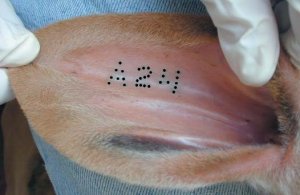
Step 6. The Finished Product
After several weeks, the ink will dry and flake out
of the ear, leaving a legible tattoo and a permanent means of identification.
This whole procedure is very easy to learn and with just a little practice you will become a
seasoned cowboy and wonder why you ever dreaded the job to tattoo cattle.
|